
There is a moment that comes after good rain in the bush when everything feels as though it has taken a deep breath.
The dust settles. The red roads soften. Dry pans become mirrors. The grass lifts almost overnight. The thorn trees seem fuller, fresher, brighter. Even the sky changes character, growing taller and more dramatic, filled with those great white clouds that only seem possible over African land.
That is the feeling in Loskop right now.
After the recent rain, the farm looks alive in a different way. The fields have colour again. Water is lying in the tracks and gathering in low places. The open ground that can look quiet and harsh in a drier spell now feels generous and full of promise. Giraffes stand against a greener horizon. Herds move through grass that suddenly looks soft and abundant. The whole landscape has a kind of renewed energy that is difficult to describe unless you have seen it for yourself.
And that is exactly why the green season deserves far more attention than it usually gets.
Too often, people speak about safari only in terms of the dry months. They imagine pale grass, concentrated game, and that classic golden-brown Africa. That season is beautiful, and for many travellers it remains ideal. But after rain, South Africa reveals a completely different kind of beauty — one that feels more cinematic, more atmospheric, more alive.
At Loskop, the recent weeks have reminded us of that all over again.
A season of renewal across South Africa
The broader weather pattern in South Africa this season has supported that feeling of renewal. Forecasting and agricultural commentary through the 2025/26 summer season pointed to generally favourable rainfall conditions in many of the country’s summer-rainfall regions, linked to a weak La Niña pattern and good support for grazing veld and agricultural growth.
Seasonal outlook reporting for southern Africa also indicated normal to above-normal rainfall across much of the region during January to March 2026, while more recent weather reporting in March continued to note favourable rain chances for the summer-rainfall region.
That does not mean every area has looked the same. South Africa is a big country, and rainfall has varied by province. Some places have had more than enough, while others have remained under pressure or have even dealt with flooding and washed-out ground. But for properties like Loskop, where the recent moisture has refreshed the veld and filled the landscape back up, the effect is unmistakably beautiful.
The bush looks different after rain
The first thing you notice is the colour.
The green is never just one green. There is the soft new grass in the open ground. The darker tone under the acacias. The silver-green of bushveld shrubs after a shower. The reddish-brown of wet roads and puddles reflecting sky. Then above it all, a blue so intense it almost feels painted, broken by towering cloud formations and shafts of white light.
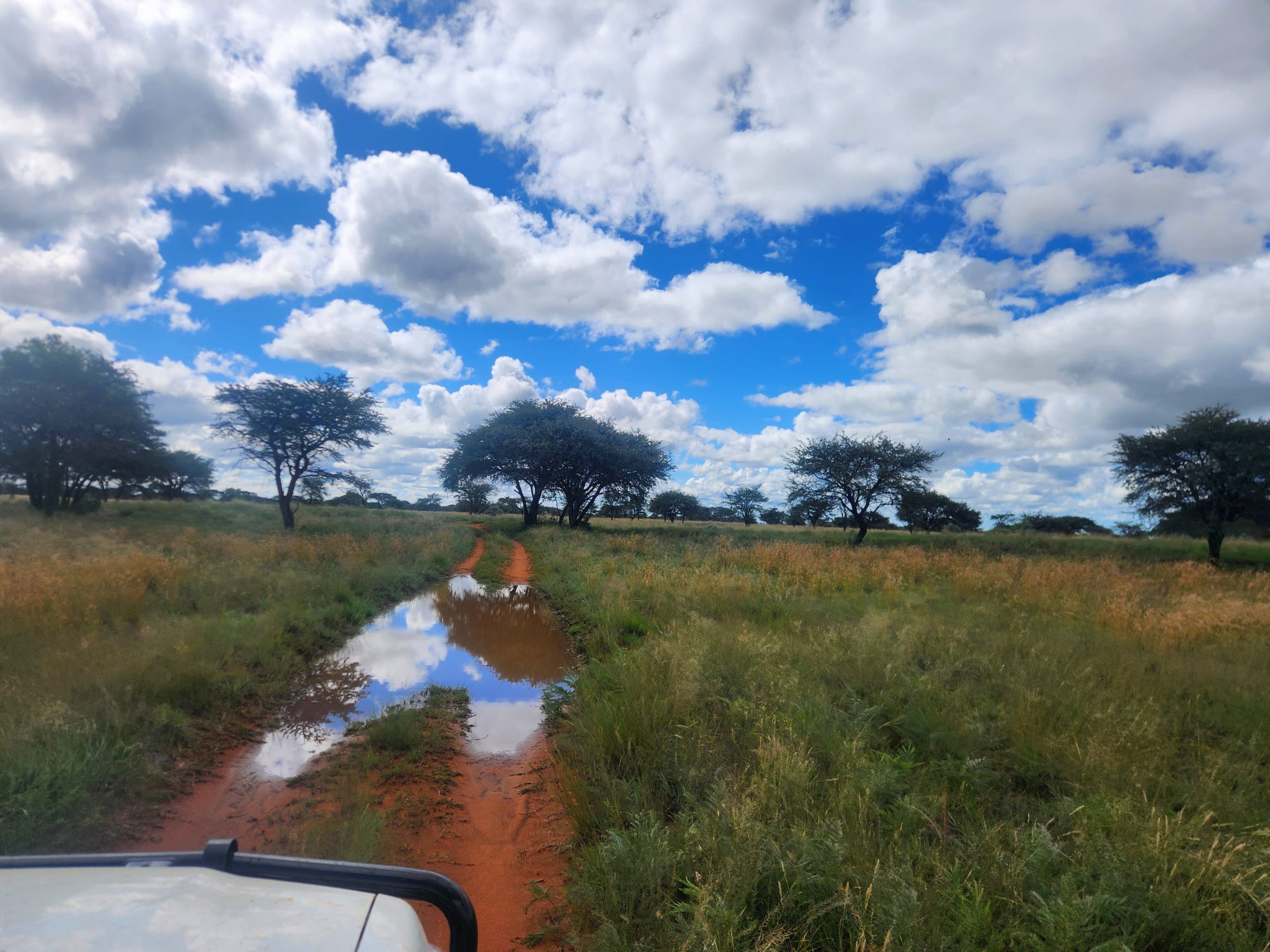
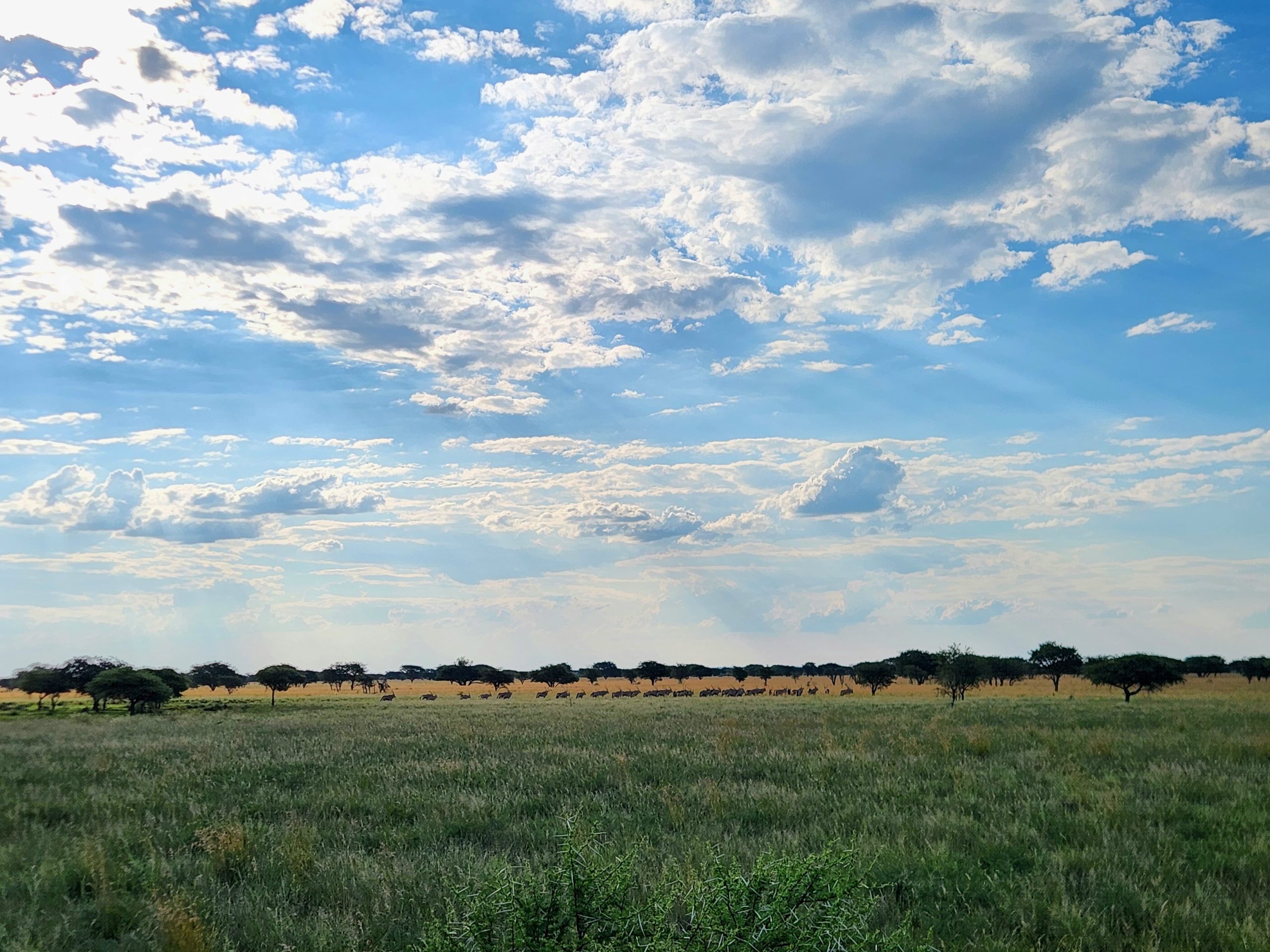
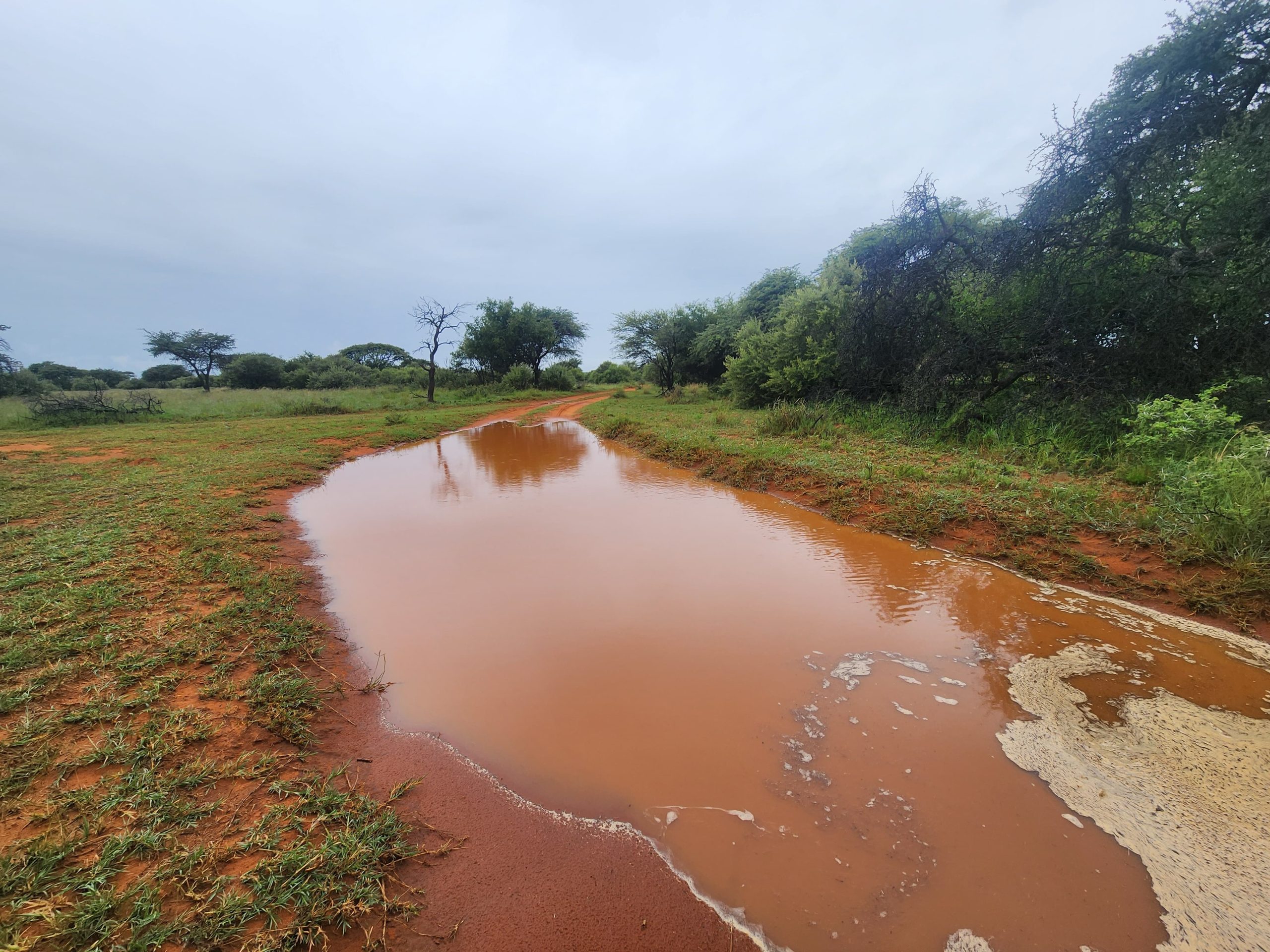
In the photographs, that contrast is everywhere. One image shows a full pan or flooded low area under a huge summer sky, with sunlight pouring down and water stretching across the landscape. Another shows a muddy track with standing water reflecting trees and clouds, the red earth looking rich and saturated instead of dry and dusty. Elsewhere, giraffes move through greener veld, and distant plains under dramatic cloud cover look almost endless.
This is not the Africa many first-time travellers expect. It is softer. Lusher. More layered. And for guests who appreciate atmosphere, photography and the emotional side of place, it can be extraordinary.
Why the green season is underrated
The phrase “green season” sometimes sounds like tourism marketing language, but in the bush it means something very real. It means the land has changed mood.
A dry-season safari often feels sharp and exposed. Movement is easier to read. Water matters more. The patterns of survival are more visible. After rain, the bush becomes richer, fuller and more theatrical. There is more texture in the grasses, more contrast in the sky, more softness in the air. The scenery alone begins to compete with the wildlife for your attention.
That shift matters.
For photographers, it can be a gift. Fresh puddles create reflections. Passing clouds make the light more dynamic. Green backgrounds can make animals stand out in a completely different way. Wide landscape shots suddenly become just as compelling as close wildlife encounters. The scene becomes less about a single animal and more about the feeling of being immersed in a living, changing ecosystem.
For non-hunting guests and families, the same season brings another kind of pleasure. There is simply more to look at. More atmosphere. More beauty on the drive from one place to another. More of those unexpected “stop the vehicle for a photo” moments.
Water changes everything
Water in the veld is never just water.
It is mood. It is movement. It is energy.
When rain settles into the landscape, the bush begins to reorganise itself around it. The dry tracks that would normally throw up dust now hold small pools. Open patches of ground become grazing points. Trees that seemed to stand apart suddenly frame mirrored surfaces below them. Birds arrive. Animals spread differently. The land starts to feel more fluid and alive.
In one of the images, a road runs between grasses and acacias with a long brown pool settled in the middle of the track. It is a simple scene, but it says so much about the moment the land is in. This is not drought country in waiting. This is veld that has received something good. This is land that has been fed.
Another image shows distant game beneath a sky streaked with light through the cloud cover. It has that feeling that only comes after rain: the sense that the air has been washed clean and the horizon has opened wider.
At Loskop, these are the details that change a stay from merely enjoyable to deeply memorable.
A different kind of safari beauty
One of the best things about a place like Loskop is that it does not need to perform. It simply changes with the season, and each season reveals a new side of it.
Right now, the farm feels open, refreshed and alive. The entrance road looks welcoming and bright under clear blue sky. The grazing lands look healthy. The clouds are dramatic without feeling threatening. The wet tracks, green growth and fuller pans all suggest a landscape in recovery and abundance rather than strain.
For hunting guests, that can mean a more immersive and visually rewarding experience in camp and in the veld. For photographic safari travellers, it is exactly the kind of season that produces mood-rich images. For families or mixed groups, it means every drive offers more than wildlife alone. It offers scenery that keeps changing, skies that turn ordinary moments into beautiful ones, and a sense that the bush is actively renewing itself around you.
That is not a small thing.
Rain gives the land a softer voice
Dry landscapes speak in lines. They are crisp, exposed, minimal.
Rainy landscapes speak in layers.
That is the real charm of Loskop after good rain. The farm has not lost its Kalahari-edge character. The red earth is still there. The acacias still define the horizon. The open spaces are still big and honest and distinctly South African. But the moisture adds gentleness. It adds depth. It turns the land from a sketch into a painting.
Even the wildlife seems to belong to the scene differently. Giraffes in greener veld do not just look like animals standing in grass. They look like part of a whole composition. The same is true of distant herds under broad skies or of a lone tree standing in shallow floodwater. The rain gives context to everything.
That is one of the reasons this season can feel so emotional. It is not only visually beautiful. It also carries a sense of relief. Of promise. Of continuation.
The best safari seasons are not always the obvious ones
Travel trends in Africa continue to shift toward slower, more meaningful trips and more personalised experiences rather than one-size-fits-all itineraries. That is good news for seasons like this, because it means more travellers are beginning to appreciate that beauty is not limited to the “classic” months.
A guest who visits after rain sees a different South Africa. Not a lesser one. Not an in-between one. Simply a different one.
They see the bush in a season of renewal. They see cloudscapes that feel enormous. They see water where only dust might usually be expected. They see grazing land looking healthy and generous. They see the quiet richness of a property responding well to the weather.
And that is worth writing about.
Loskop after the rain
If the recent photographs from Loskop tell us anything, it is that the farm is in a lovely moment.
The fields look good. The roads tell the story of recent showers. The sky is doing what great African skies do best — towering, shifting, glowing, stretching. The wildlife looks at home in it. The land feels replenished.
For guests arriving in a season like this, the experience begins before the first sighting and long before the first meal back at camp. It begins on the drive in, with green veld and clean air. It continues in the small things: light on wet red soil, reflections in puddles, clouds rolling over open country, a herd grazing beneath a sky too beautiful to ignore.
That is the gift of good rain.
And right now, Loskop is wearing that gift beautifully.
