
There are some hunting days that stay with you long after the mud has dried on the vehicle and the spent shells have been cleared away.
Not because everything went perfectly. Not because the weather was easy. And not because the day unfolded in a neat, predictable way.
They stay with you because they had character.
This pigeon hunt was one of those days.
From the first view across the dark sunflower fields to the low-hanging clouds that rolled over the horizon, this was not a quiet or ordinary day in the field. It was dramatic, fast-moving, muddy underfoot and deeply South African in every sense. The skies shifted by the hour. Rain hung in the distance and then swept across the land. Birds lifted in numbers over the fields. Sunflowers bowed under the weight of the season. Vehicles stood splashed in red mud. Coffee was poured beneath the Infinite Safaris Africa canopies. Small fires burned low in the grass while hunters watched the sky and waited for the next flight line to come alive.
It was a pigeon hunt, yes.
But it was also much more than that.
It was a day of weather, movement, patience, friendship and fieldcraft. It was the kind of outing that reminds you that wing shooting is never just about the bird. It is about the land, the season, the mood of the sky, the people with you, and the stories that take shape in between the shots.
A field built for movement
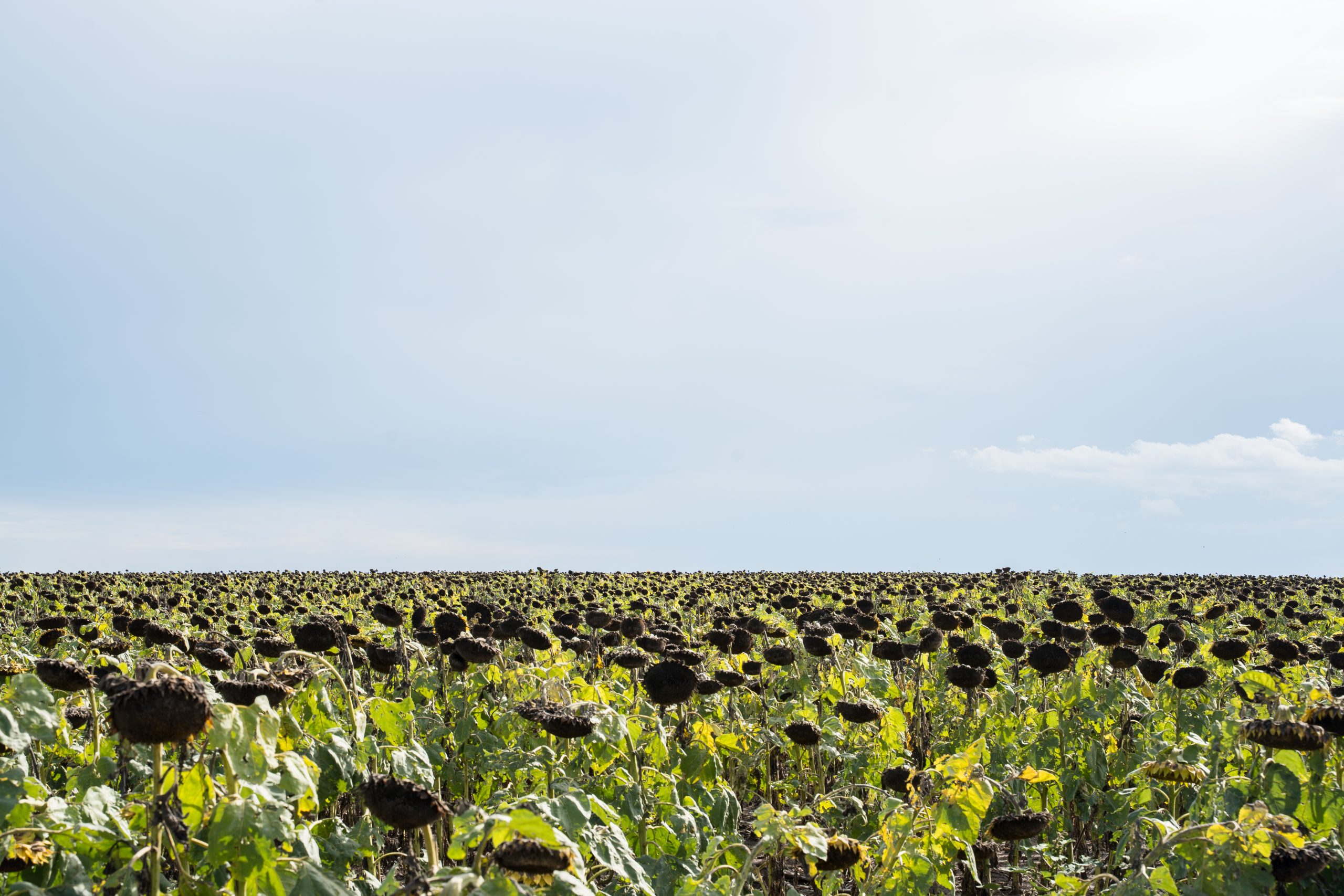
There is something visually striking about a late-season sunflower field.
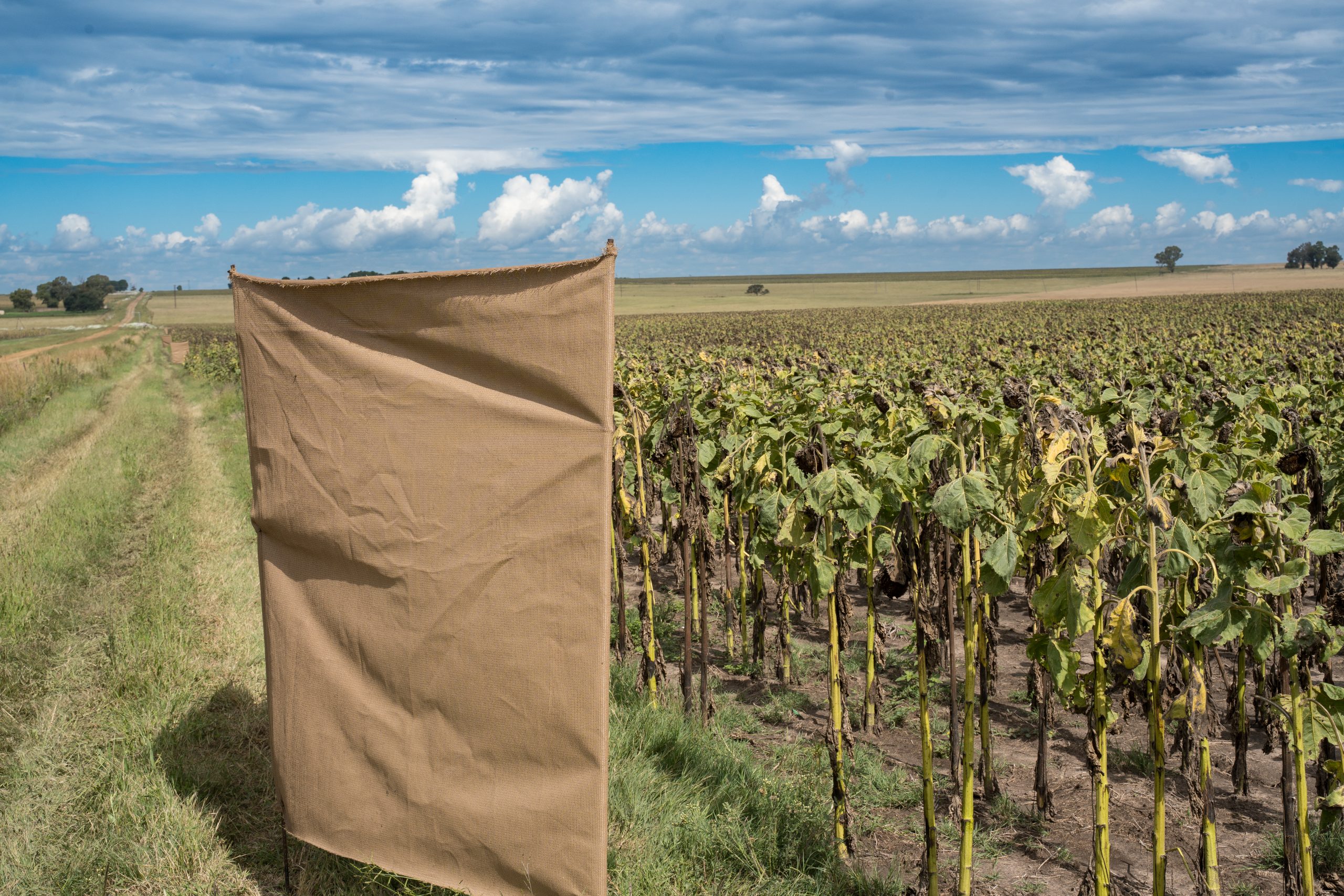
It has a mood all its own. The plants are tall but fading, dark-headed and heavy, their leaves curling and drying, their stalks standing like rows of rough markers across the land. Under a bright sky they look almost painterly. Under storm clouds they feel cinematic. And when birds begin working over them, the whole field seems to wake up.
That was the setting for this hunt.
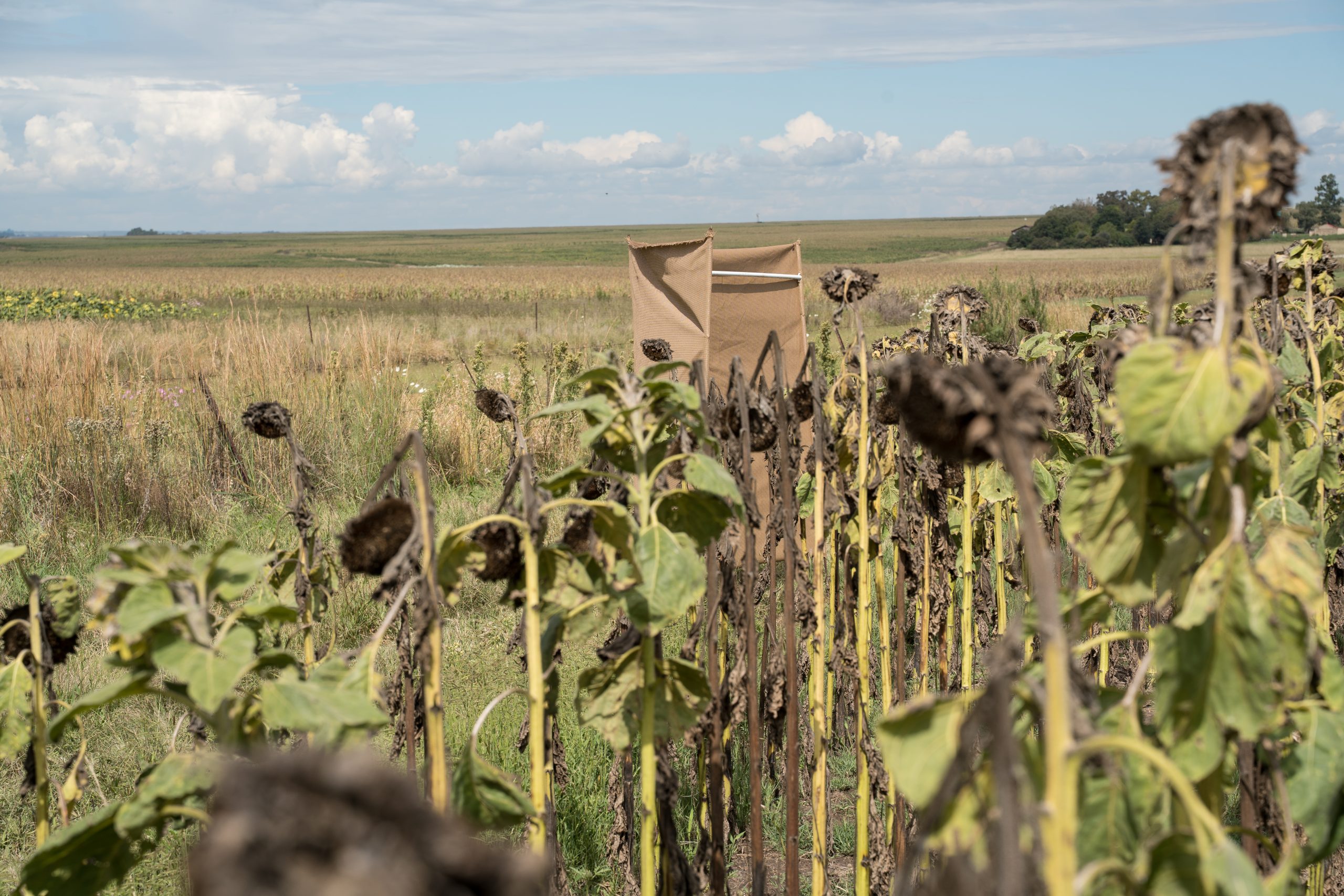
The images tell the story beautifully. Vast sunflower lands stretching to the horizon. Countless dark heads turned down with the season. Clouds building and breaking in huge formations overhead. Rain drifting in from the distance. Mud lying thick in the tracks. Hidden cover set at the edge of the field. Hunters standing quietly, watching above them. The occasional burst of movement as pigeons crossed fast over the crop and everyone shifted from waiting to action in an instant.
It is exactly the kind of environment that makes a pigeon hunt feel alive.
When the weather becomes part of the hunt
No two field days are ever the same, and weather has a way of becoming its own character in wing shooting.
On this day, the weather was impossible to ignore.
The hunt unfolded under immense skies, sometimes bright and open, sometimes threatening with dark rain clouds rolling in across the fields. In some moments the light was soft and silver, flattening the land under heavy cloud cover. In others, the sun broke through and lifted the entire landscape, making the rows of sunflowers glow and the muddy field tracks shine against the grass.
That kind of sky does something to a hunt.
It sharpens the atmosphere. It heightens anticipation. It makes every pause feel more intense, because you know the weather could change again in an instant. The mud, the moisture, the drifting rain and the shifting light all add to the sense that you are out there in a real landscape, on a real day, not in some polished or predictable setting.
And in South Africa, that matters.
Because part of what people come for is exactly that authenticity. Not a staged experience, but a proper day in the field where the land still has the final say.
The rhythm of a proper pigeon hunt
Pigeon hunting has its own rhythm.
There are quiet spells where everyone watches the horizon and scans the air. There are moments where conversation drops away completely and all attention moves upward. Then, suddenly, there is movement — quick wings, changing lines, a burst of action — and the stillness breaks.
Then it settles again.
That stop-and-start pulse is part of what makes the experience so compelling. It is social without ever becoming casual. It demands focus without requiring constant motion. It gives people time to think, time to observe, time to share the field properly.
And that rhythm was clearly part of this day.
The photos show hunters standing ready, shotguns in hand, eyes lifted. They show muddy boots planted firmly in the field edge. They show prepared positions beside the sunflowers, simple cover set up at just the right angle, and the kind of field awareness that only comes when people know how to read the land in front of them.
There is a discipline to that. A calmness. A readiness.
And then, when the birds are moving, everything changes in a second.
More than the shot
One of the finest things about a well-run field day is that the experience never begins and ends with the shooting itself.
It begins with the drive out. The road. The changing sky. The sight of the land opening in front of you.
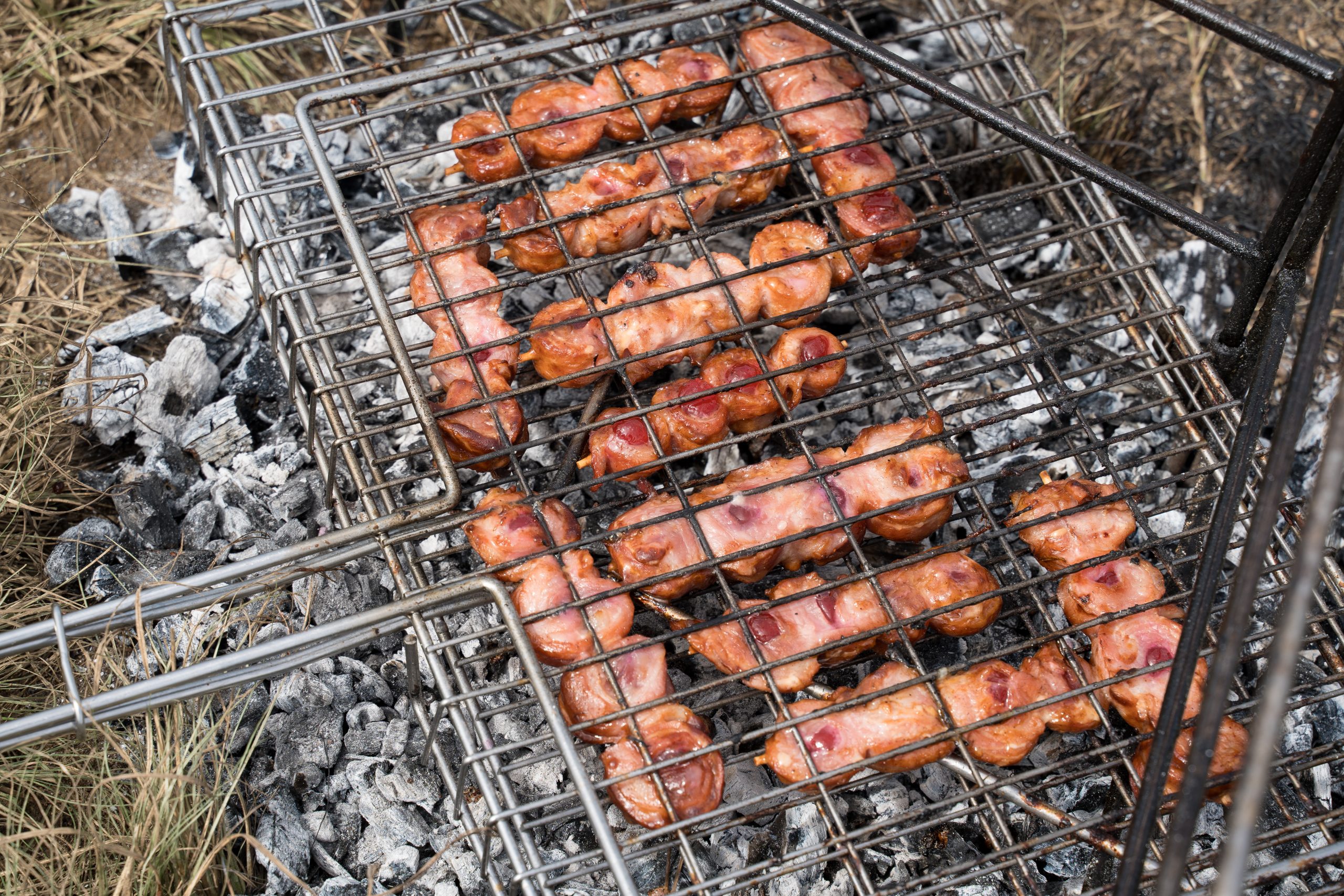
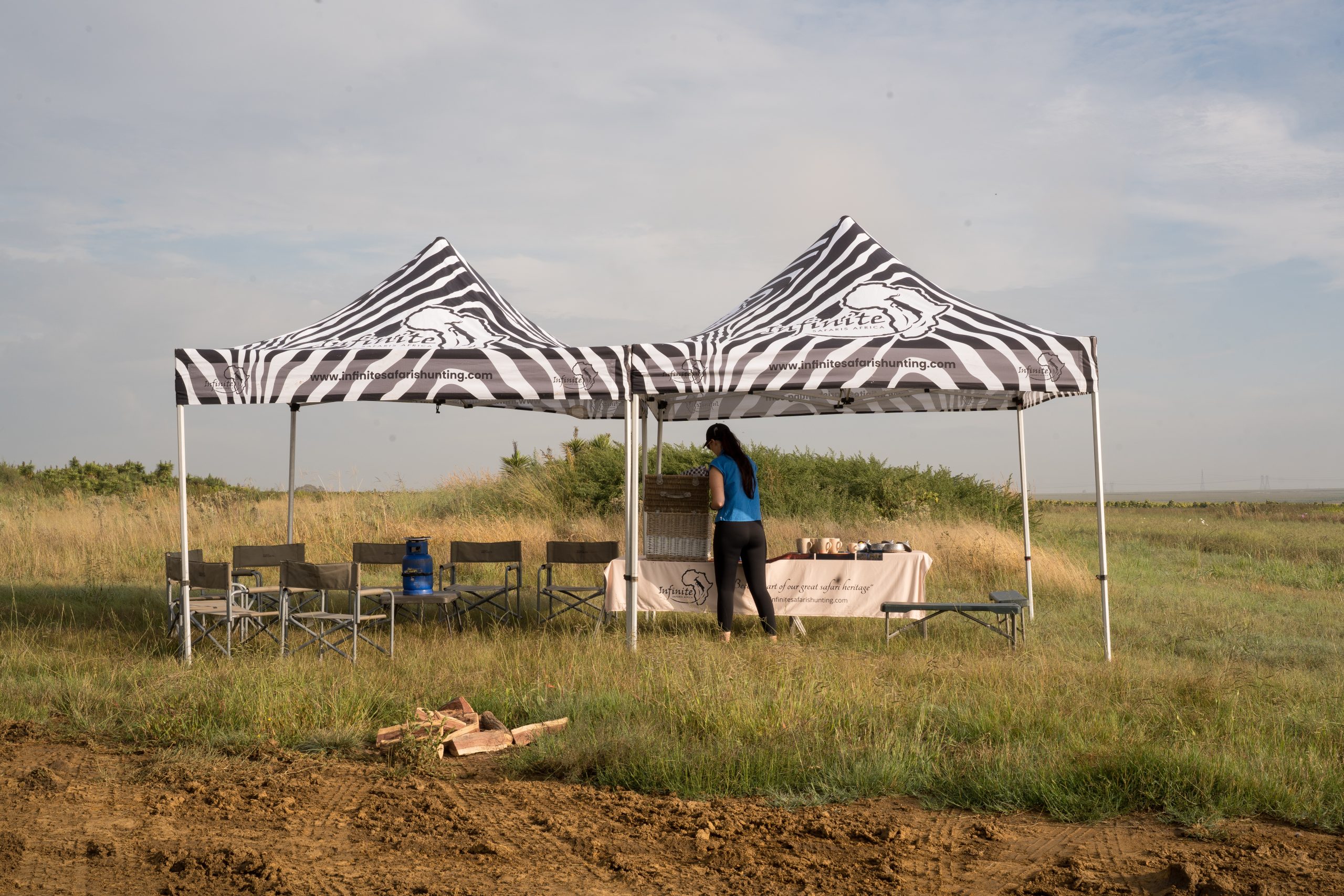
It continues with the setup. The canopies going up. Coffee mugs lined out on the table. Ammunition boxes set beside a fine shotgun. A fire started in the grass. Vehicles pulled in at the edge of the field. People gathering, greeting, preparing.
Then comes the long middle of the day, where the shooting becomes part of a wider experience — watching weather roll in, sharing stories between flights, walking muddy field edges, studying the lines of birds over the crop, and appreciating the sort of wide-open country that makes South African wing shooting so distinctive.
And somewhere in all of that, a proper sense of camaraderie takes shape.
You can see that in these images too. The group seated beneath the Infinite Safaris Africa gazebos. The field table arranged with mugs, supplies and gear. The small fire smoking low while the vehicles stand nearby. The hunter at the grill preparing food in the grass. The movement back and forth between action and rest, intensity and ease.
That is what makes a day like this memorable.
It is not only the pace of the birds. It is the full field culture around it.

Mud, rain and realism
There is something wonderful about a hunting day that does not try to stay clean.
The mud on the Land Cruiser door says as much about the day as any photograph of the field itself. The wet grass, the softened ground, the damp air and the dark storm fronts in the distance all remind you that this was not a fair-weather outing arranged for appearance alone. It was real. It happened in the conditions the land offered.
And that sort of realism gives the entire experience depth.
Anyone can imagine wing shooting on a perfect bright day. But there is another kind of beauty in a hunt that unfolds beneath rain-heavy skies, beside muddy tracks, in a field that feels raw and alive. It strips the experience back to what matters: good people, proper preparation, the right ground, and a willingness to meet the day as it comes.
That spirit is one of the reasons hunts like this stay vivid in memory.
South African fields have their own magic
There is a certain scale to South African agricultural land that lends itself beautifully to wing shooting.
The fields feel broad and open. The horizon sits far back. The sky is never small. Whether you are looking over sunflowers under towering cloud banks or across open grass at the edge of cultivation, there is always a sense of space — and in that space, birds can appear from nowhere and vanish again just as fast.
For international guests especially, this kind of setting carries a strong sense of place. It feels unmistakably African, but not in the stereotypical way people expect. This is not only thornveld and safari tracks. This is also farming country, changing weather, field edges, flower strips, open roads and productive land where hunting traditions still meet working landscapes.
That combination gives pigeon shooting here a special identity.
It is not only about numbers. It is about atmosphere.
A day that tells the wider story
What makes this particular pigeon hunt worth writing about is not only that it happened, but that it reflects so much of what Infinite Safaris Africa does well.
It shows attention to detail. It shows field hospitality. It shows comfort without losing authenticity. It shows people out in proper country under proper skies, meeting the day as it comes. It shows that even in mud and rain, there can be style, calm and good organisation. It shows that field sports, when done well, are about much more than the obvious headline.
They are about shared time outdoors.
They are about staying present in the changing weather.
They are about watching the land carefully.
They are about long views, quick reactions and quiet moments in between.
And sometimes, they are about sitting beneath a zebra-striped canopy with a hot drink in your hand while dark clouds gather beyond the sunflower heads, knowing the next flight could come at any moment.
The beauty of the in-between moments
Some of the best photographs from this day are not of birds at all.
They are of the setup. The field kitchen. The coffee cups. The branded cloth catching the light. The muddy vehicle. The hunter standing still and watching the sky. The hidden cover placed neatly at the edge of the crop. The walk back along the road after a spell in the field.
Those images matter, because they capture something many people miss.
A great pigeon hunt is not only measured in action. It is also measured in feel.
How the day looked. How it smelled after rain. How the clouds moved. How the field stretched away from you. How the people around you settled into the rhythm of waiting, watching and responding. How the land carried both beauty and challenge in equal measure.
That is the part that cannot be faked.
And that is why this hunt deserves to be remembered.
More than a hunt, part of the heritage
At Infinite Safaris Africa, days like this are part of a bigger story.
They are part of the heritage of the field. Of time spent outdoors in working country. Of strong coffee under canvas, muddy roads, broad skies, and the old, satisfying rhythm of people gathered in the right place at the right time.
This pigeon hunt had all of that.
Storm skies. Sunflower fields. Fast wings. Muddy boots. Smoke from the fire. Quiet concentration. Shared meals. Good ground. Good company.
And when all of that comes together, what you get is not simply a successful day in the field.
You get a memory with weather in it. With colour in it. With movement in it. With a sense of place so strong that you can almost feel the wet grass and hear the wings again.
That is the kind of day people talk about afterwards.
And that is exactly the kind of day this was.
