
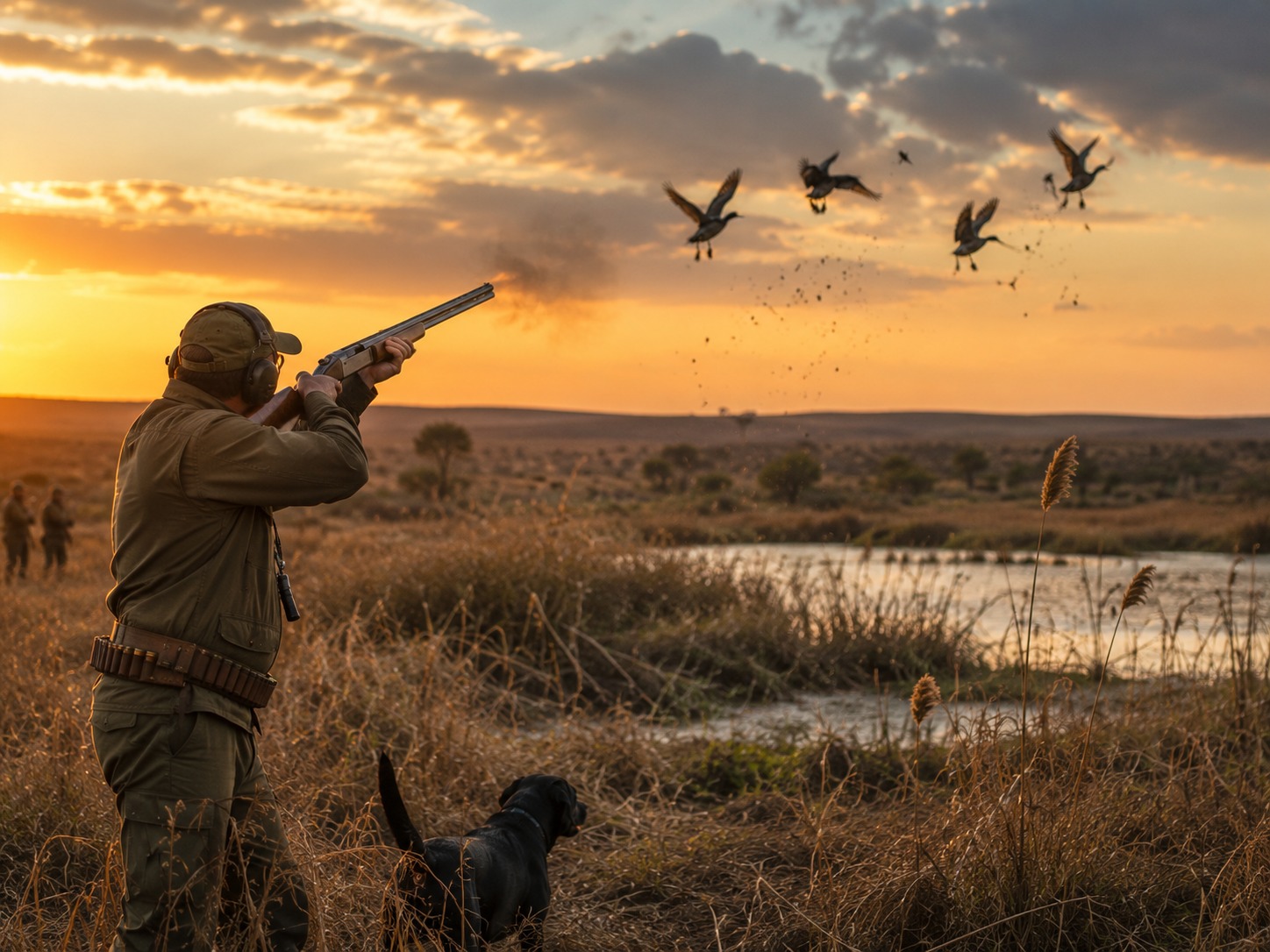
South Africa is known across the world for its plains game, big game, dramatic landscapes and classic safari experiences. Yet one of the country’s most underrated outdoor traditions is wing shooting — a field experience built around birdlife, habitat, timing, patience and respect for the land.
For many international travellers, wing shooting in South Africa offers something different from a traditional plains game safari. It is faster in rhythm, more social in nature, and closely tied to the movement of birds across farms, wetlands, grasslands and open agricultural landscapes. It is not only about the outing itself, but about understanding the bird species, the season, the land and the careful management that makes a responsible experience possible.
South Africa’s birdlife is incredibly rich. BirdLife South Africa’s national checklist includes a wide variety of gamebird and waterbird species, including guineafowl, francolin, spurfowl, geese and ducks, showing how diverse the country’s birdlife is across different habitats. For guests who enjoy the outdoors, wing shooting can be a way to experience this diversity in a more active and traditional safari format.
What is wing shooting?
Wing shooting generally refers to the hunting of birds in flight, usually in open countryside, agricultural areas, grasslands, wetlands or bushveld edges. In South Africa, it is usually arranged through a professional outfitter or experienced operator who understands the land, the bird species, local rules, seasonal conditions and ethical expectations.
The experience is very different from a big game safari. Instead of long glassing sessions, tracking spoor or waiting at a waterhole, wing shooting is built around movement, timing and bird behaviour. Guests may spend time in the field during the cooler parts of the day, observing bird activity and experiencing the changing rhythm of the land.
The key point is that responsible wing shooting is regulated. Seasons, permits and bag limits are not the same everywhere in South Africa. They differ by province, by species and by season. SA Wingshooters publishes provincial bird hunting season information and bag limits, and their material shows how specific these rules can be between provinces and species. South Africa also has national norms and standards for hunting methods under biodiversity legislation, which means the activity sits within a formal regulatory framework.
That is why guests should never treat wing shooting as something informal. It should always be planned through the correct channels, with the correct permissions, and with a clear understanding of what is allowed in that area at that time.
The bird species that shape the experience
The beauty of wing shooting in South Africa is that it introduces guests to bird species that are deeply connected to the landscape.
One of the best-known birds is the Helmeted Guineafowl. SANBI describes the Helmeted Guineafowl as widely distributed throughout southern Africa and notes that it has traditionally been hunted for sport. It is also closely related to spurfowl and francolins, making it part of a broader group of birds often associated with field sport and rural landscapes.
Guineafowl are instantly recognisable. Their spotted plumage, bare head, bony casque and noisy flock behaviour make them one of the most iconic birds of the South African countryside. They are often seen moving in groups, calling loudly as they travel through open areas, bush edges and farmland.
Francolin and spurfowl add another layer to the experience. These are ground birds, often seen in grassland, bushy areas and roadside edges. SANBI notes that the Cape Spurfowl is the largest of the six spurfowl species found in South Africa. Other sources describe francolin and spurfowl as birds that often feed on fallen grass seed and rely on cover to avoid predators.
Waterfowl can also form part of South Africa’s wing shooting landscape where legally permitted and properly managed. Ducks and geese are associated with dams, pans, wetlands and agricultural water systems. These habitats bring a different kind of beauty to the experience, especially in the early morning when bird calls, mist and open water create a completely different safari atmosphere.
Pigeons and doves may also be part of certain wing shooting experiences, particularly in farming regions where bird movement is linked to crops and seasonal food availability. Again, the important point is that the species, location and timing must always comply with provincial regulations.
Why habitat matters
Wing shooting is not only about birds. It is about the habitat that supports them.
Different bird species need different types of land. Guineafowl often use a mix of open ground and cover. Spurfowl and francolin are linked to grass, seed, bush edges and protective vegetation. Waterfowl depend on water systems, wetlands, pans, dams and surrounding feeding areas. Pigeons and doves respond strongly to food availability and seasonal movement.
This is why a good wing shooting experience begins with land knowledge. The people arranging the outing need to understand where birds naturally occur, how weather affects movement, whether the area can support the activity, and whether the timing is suitable.
For guests, this is part of the appeal. A well-run wing shooting day teaches you to look at the land differently. You begin to notice wind, light, bird calls, water, crop edges, cover and the way birds move through the landscape. It is an outdoor experience that rewards attention.
The role of responsible management
A responsible wing shooting experience should never be careless or excessive.
Bird numbers, habitat health, breeding seasons and legal bag limits all matter. The purpose of regulation is to make sure that hunting pressure does not damage bird populations or natural systems. Provincial seasons and bag limits exist for a reason, and guests should expect a professional operator to follow them carefully.
This is also where experienced landowners and outfitters become important. They understand when a field can be used, when it should be rested, which bird species are present, and how to keep the experience within responsible limits.
For visitors, this adds reassurance. You are not simply arriving for a day outdoors. You are entering a managed system where the land, wildlife and rules all need to work together.
What guests need before a wing shooting safari
For anyone considering wing shooting in South Africa, preparation is important — but it should be approached through the correct professional channels.
Guests should make sure they have:
A booking with a reputable outfitter or safari operator.
Clear confirmation of the province, season and species involved.
The correct permits and permissions arranged or confirmed before the outing.
Guidance from the operator on clothing, safety protocols and field conduct.
Comfortable outdoor clothing suitable for the season and landscape.
Closed walking shoes or boots for uneven ground.
Sun protection, a hat and enough water.
Binoculars for bird and wildlife observation.
A camera or phone for landscape and lodge memories.
A respectful attitude towards wildlife, landowners, guides and local rules.
International guests must also understand that South Africa has formal processes for the temporary importation of firearms, and travellers who intend to do so must follow SAPS requirements and verify current rules before travelling. For most guests, the best approach is to discuss all legal and practical arrangements directly with the outfitter well in advance.
What the day feels like
A wing shooting day has its own rhythm.
It may begin early, with coffee before sunrise and a quiet drive into the countryside. The air is still cool, the light is soft, and the land slowly begins to wake. Birds call from the cover. Farm tracks glow red or gold in the morning light. The day feels open and alive.
There is usually a social element too. Wing shooting is often enjoyed in small groups, with time spent outdoors, shared stories, meals in the field and the satisfaction of being immersed in the South African countryside. It can feel less formal than a traditional safari drive, but no less memorable.
The experience is also highly seasonal. Rainfall, crops, veld condition and bird movement all influence the day. That unpredictability is part of the charm. No two outings feel exactly the same.
Why wing shooting appeals to international guests
For international travellers, wing shooting in South Africa offers variety.
It can be added to a longer plains game safari, combined with photographic safari days, or included as part of a broader outdoor itinerary. It gives guests a chance to experience rural South Africa in a way that is active, traditional and closely connected to the land.
For some, the appeal lies in the birdlife. For others, it is the atmosphere: the early mornings, the open fields, the guide’s knowledge, the meals, the conversation and the feeling of being part of an authentic outdoor tradition.
It is also a good fit for travellers who appreciate detail. Wing shooting asks you to notice the small things — the change in weather, the movement of birds, the sound of wings, the shape of the landscape and the discipline of doing things properly.
A different side of safari
South Africa’s safari industry is broad. It is not limited to one kind of experience.
There are photographic safaris, plains game safaris, dangerous game safaris, family safaris, bow hunting experiences, fishing, hiking, birding and lodge-based holidays. Wing shooting adds another dimension to that offering.
It gives guests a way to experience the birdlife and countryside of South Africa while still being part of a professionally managed safari environment.
When done responsibly, it is not simply an activity. It is a field experience built on timing, respect, legal compliance, habitat knowledge and appreciation for the birds that make the South African landscape so alive.
Conclusion
Wing shooting in South Africa is best understood as a wildlife-based outdoor experience.
It is about birds, habitat, seasons, land management, guest preparation and respect for the rules that protect the future of the activity. For travellers who want something different from a standard safari itinerary, it can add energy, tradition and variety to their time in South Africa.
With the right outfitter, the right season and the right approach, wing shooting becomes more than a day in the field. It becomes another way to experience the beauty, rhythm and wildlife heritage of South Africa.
